
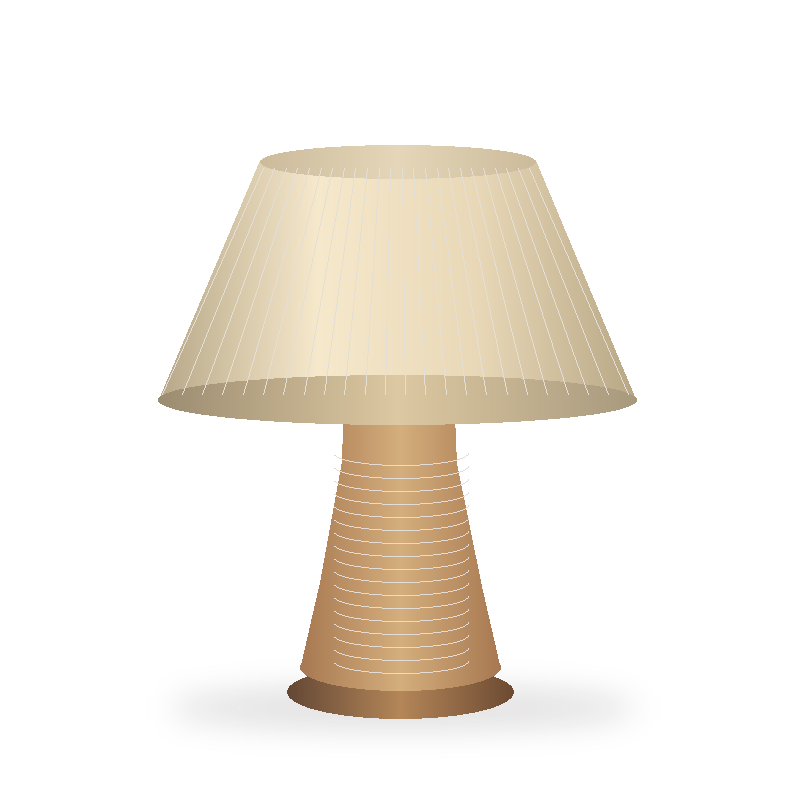
Start with the surface, not the photograph
Measure the table’s usable top: width and depth, or diameter if it is round. Note what else will stay there, such as a book, a glass or a charging cable. The space left for a lamp may be much smaller than the whole tabletop.
Write down a maximum base width and depth you are comfortable with. Keep these separate from the shade width. A broad shade may overhang a narrow base; that can change how the lamp sits beside a sofa, curtain or walkway. Measurements alone do not establish stability.
A table is 48 cm wide and 42 cm deep. You decide to reserve an 18 × 18 cm area for the base. A lamp described as “32 cm wide” is still unconfirmed until you know whether that is its base or its shade. These are illustrative dimensions, not a product recommendation.
Think about what the light is for
A reading lamp, a soft pool of evening light and a decorative accent are different briefs. Look for the information that helps you judge your particular use: shade material, where the light escapes, adjustment and the light source.
Check whether the bulb is included, the fitting it needs, and the manufacturer’s stated bulb limits. A shade and a base shown together are not necessarily sold together. For an integrated LED lamp, check the supplied information about dimming and replacement rather than assuming it behaves like a replaceable bulb.
Locate the socket and think about the cable route and switch position. A good-looking lamp is less useful if the everyday control is awkward to reach.
Compare one exact combination
Keep finish, shade, size and retailer offer together. “Oak with linen shade” and “ceramic base only” are different purchases, even if they share a collection name.
Compare the unconditional item price first, then add known delivery separately. If delivery is unknown, leave it unknown. Record whether a bulb, shade or other component needs a separate purchase; a lower headline price can conceal a different configuration.
For the visual relationship, choose one connection to the room: a material repeated elsewhere, a colour that sits comfortably with your textiles, or a contrasting shape. You do not need every finish to match.
Before you decide
- Usable tabletop dimensions and a separate base limit.
- Base footprint, overall height and shade width, each named.
- Exact finish and shade combination; what is included.
- Socket, cable, switch and the stated light-source requirements.
- Item price, delivery and any missing components recorded separately.